Trebuchets, Catapults, and Ballistas
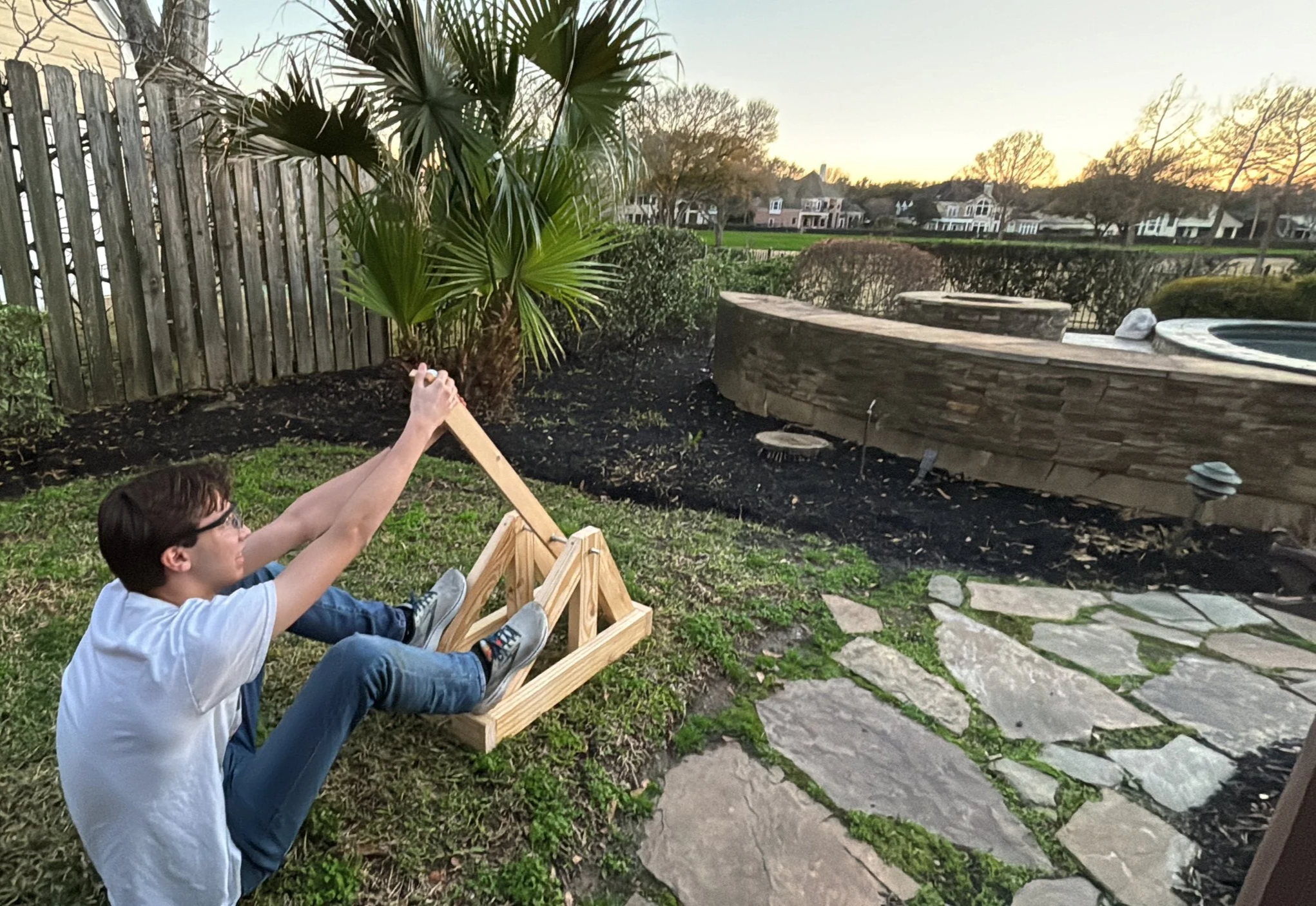
For three years, I competed in a annual competition where I built custom Roman-themed siege weapons (at scale). Over the years I competed in both the small and large size classes and experimented with three different styles of siege devices.
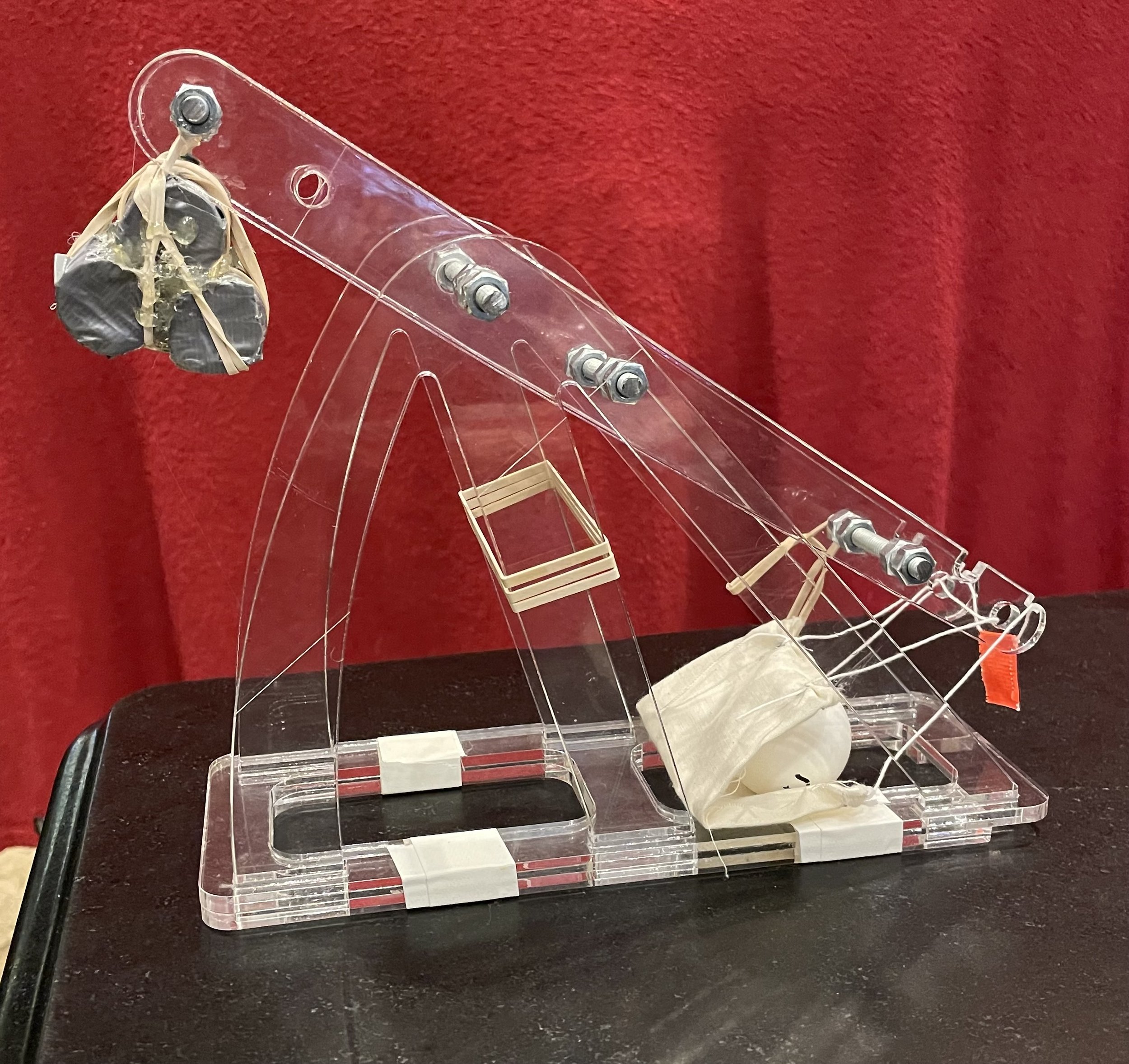
This was my first entry, and proved I had a lot to learn
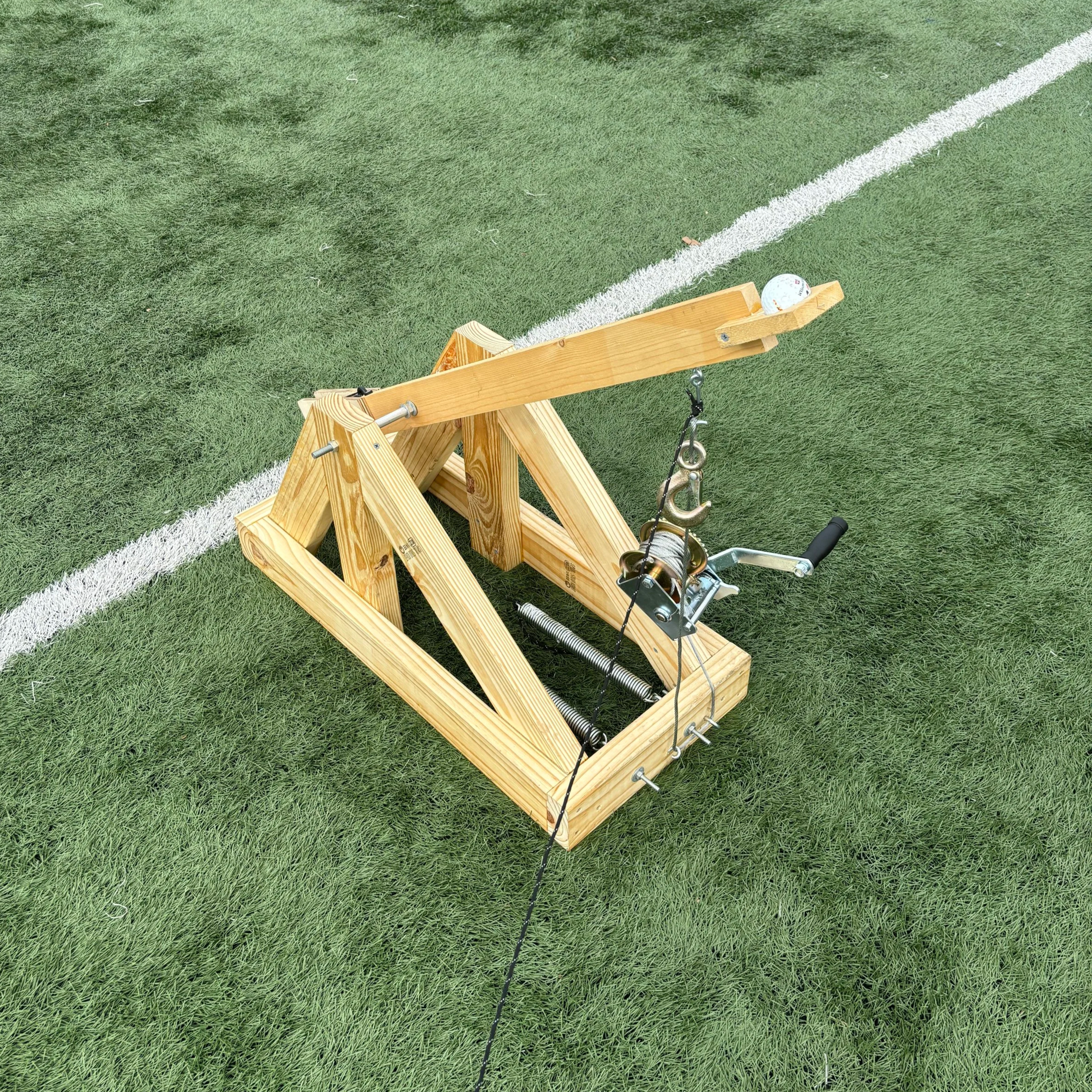
These are my most professional and successful devices
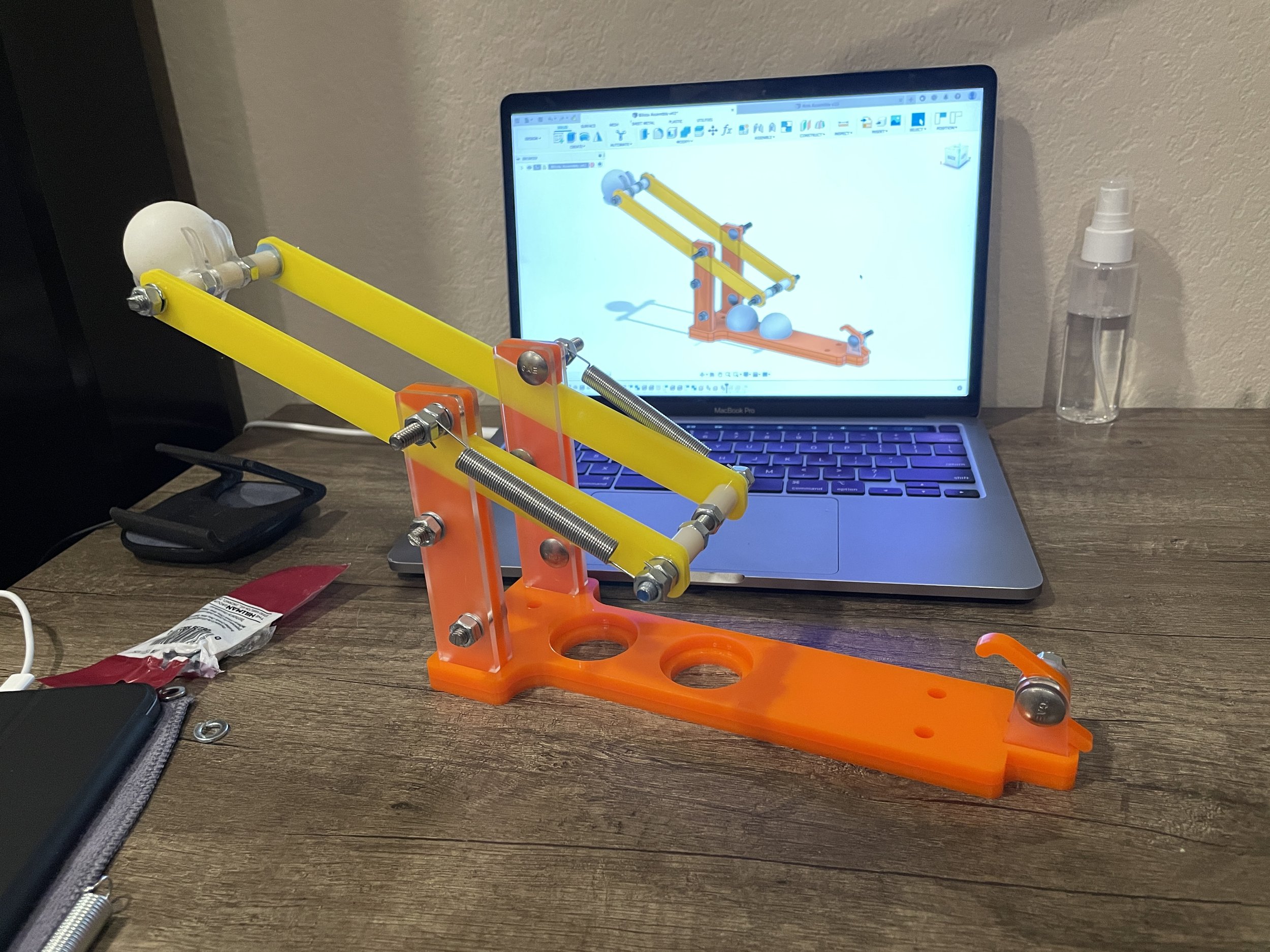
An experimental form factor between competitions
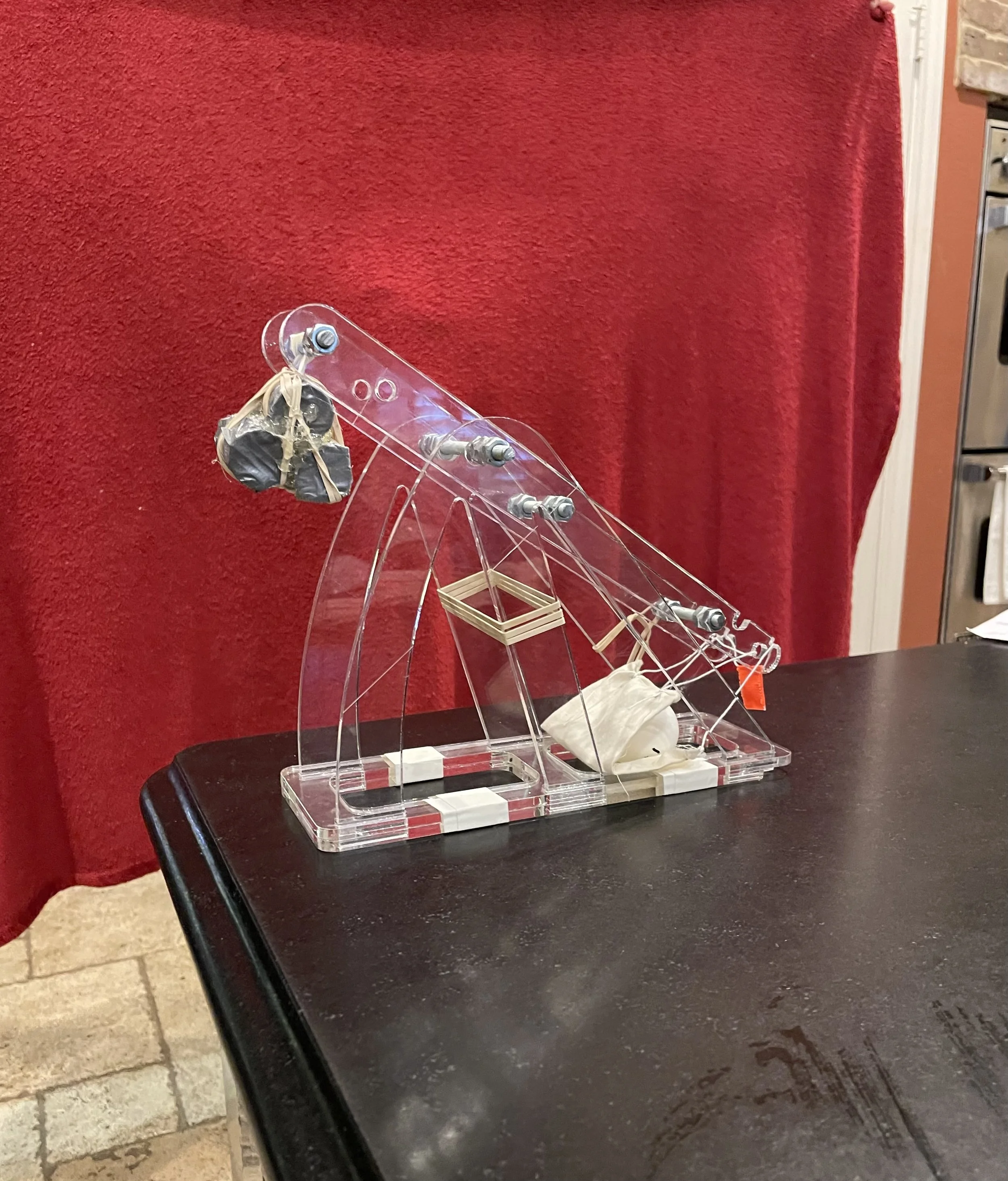
Trebuchet
My first entry, using a proper counterweight and sling to launch a ping pong ball. This model only launched the ball roughly 1 foot since I struggled to dial in the launch angle, largely due to the lack of modularity in the design.
The key takeaways from this first design were learning how to use laser cutting more effectively, design as such, and a much more well rounded understanding of how a trebuchet uses a sling to launch the projectile.
Moving forward, I decided to use springs instead of a counterweight (creating more of a catapult-trebuchet hybrid), and created designs with more areas for minor adjustment.
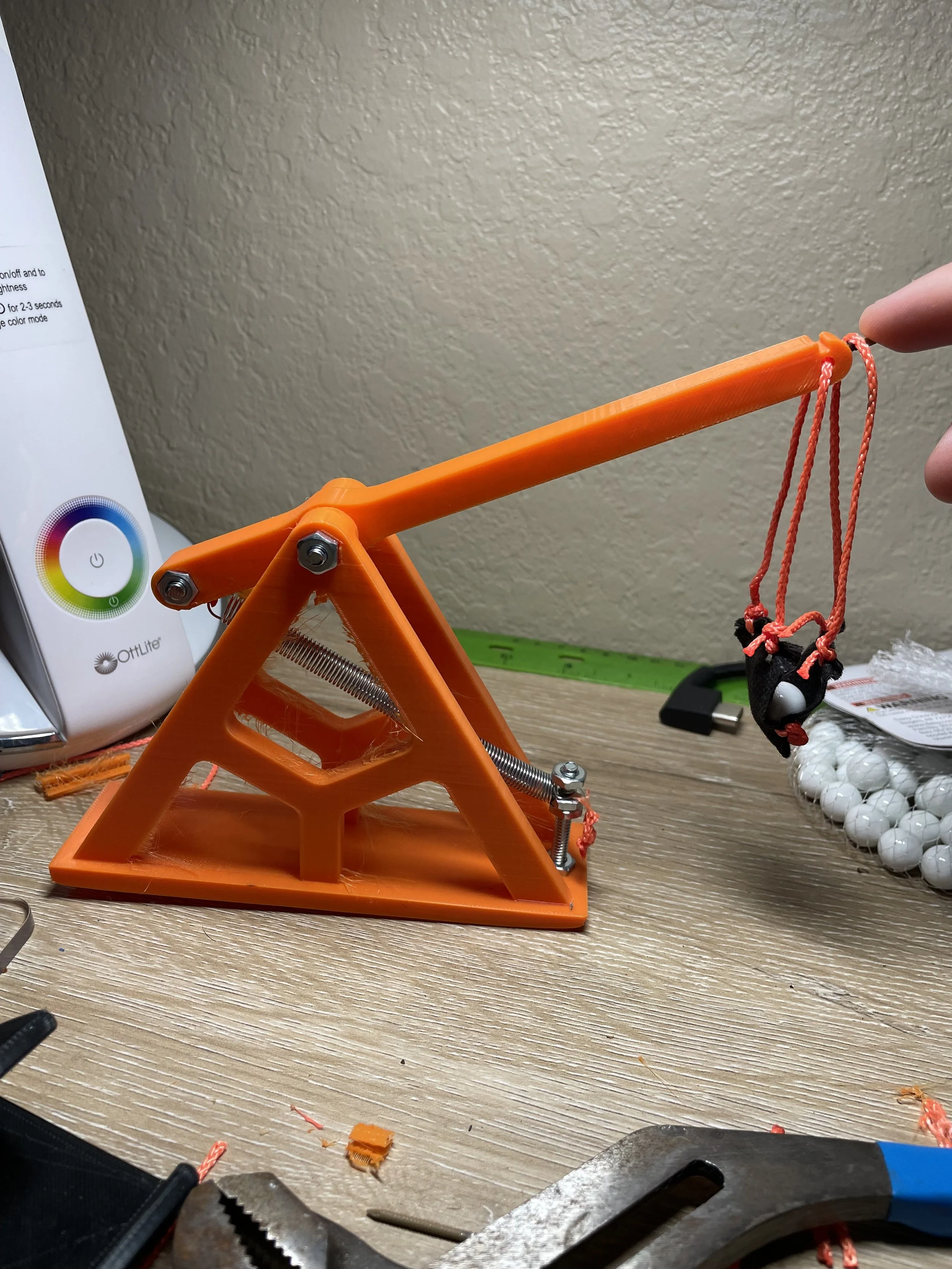
Catapults
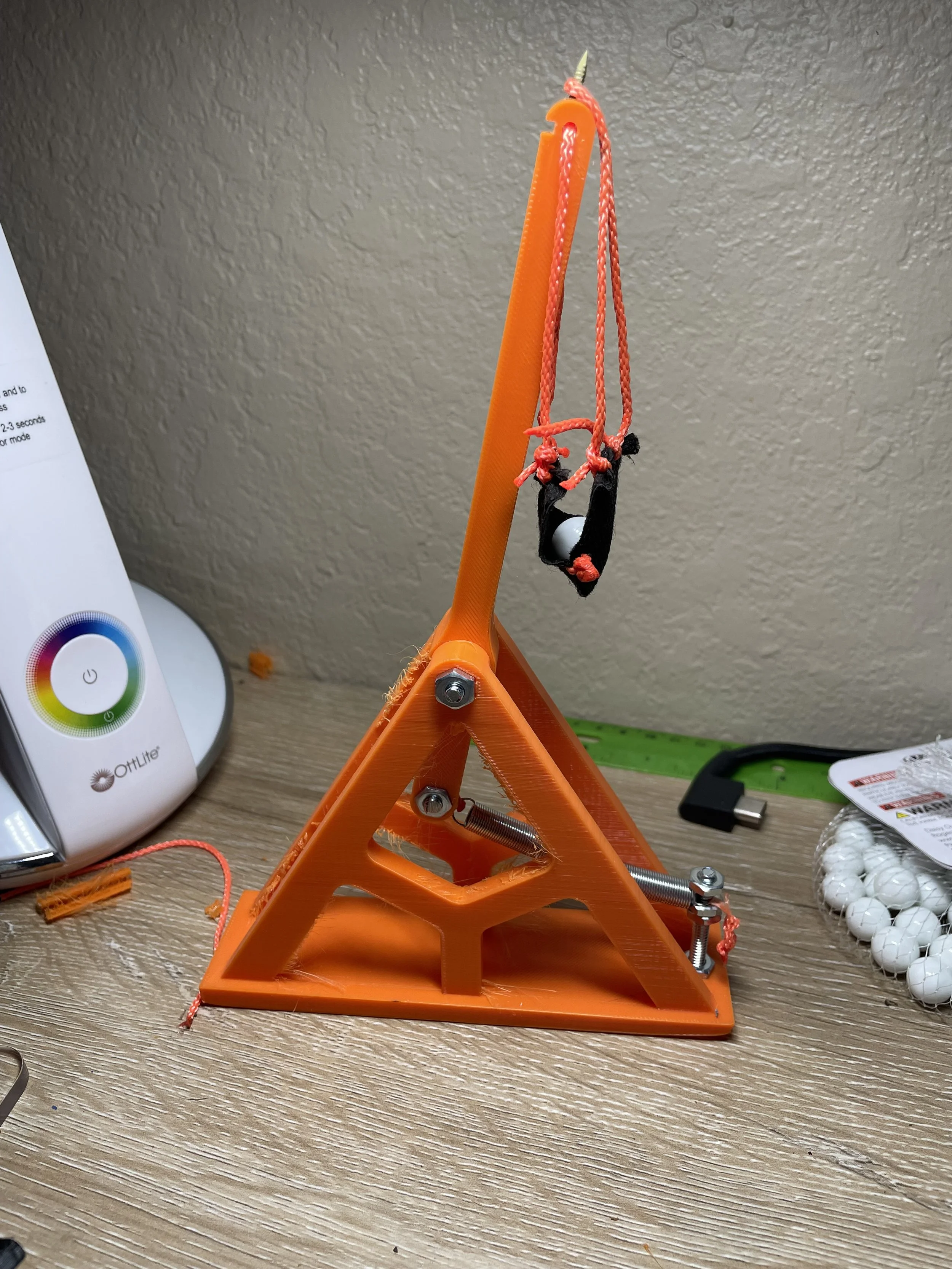
These are by far my most successful and professional results, as these devices had a forgiving form factor and came latest in the series of competitions meaning I had gained a lot of experience from previous designs.
Design 1: Proof of Concept
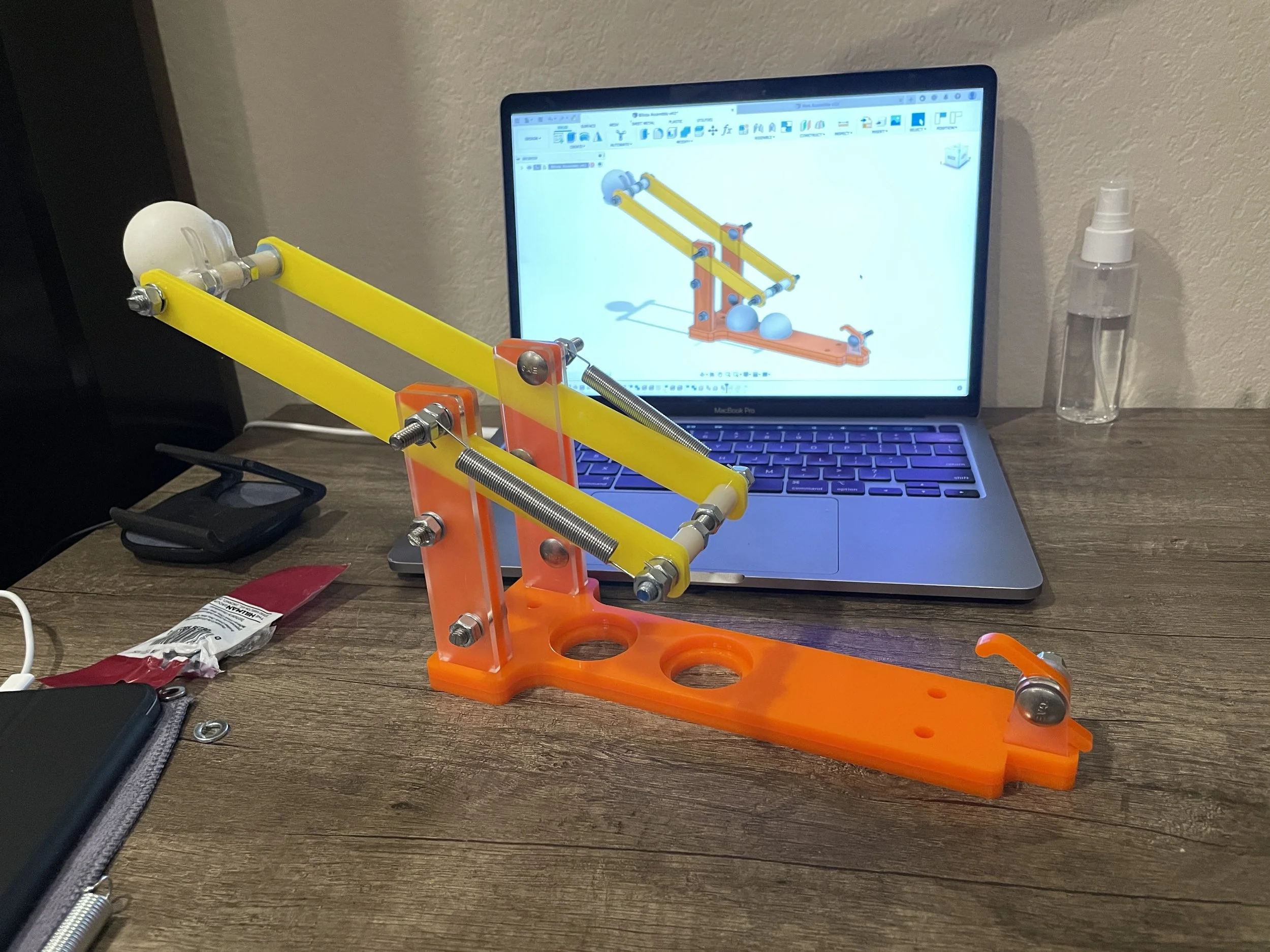
This scaled down, 3D printed device was my first attempt at a sort of trebuchet-catapult hybrid launcher, and served as a proof of concept for the following design made out of laser cut acrylic. This small device was able to launch a small glass marble across a room, and taught me more valuable lessons about launch angle.
Design 2: Tabletop Success
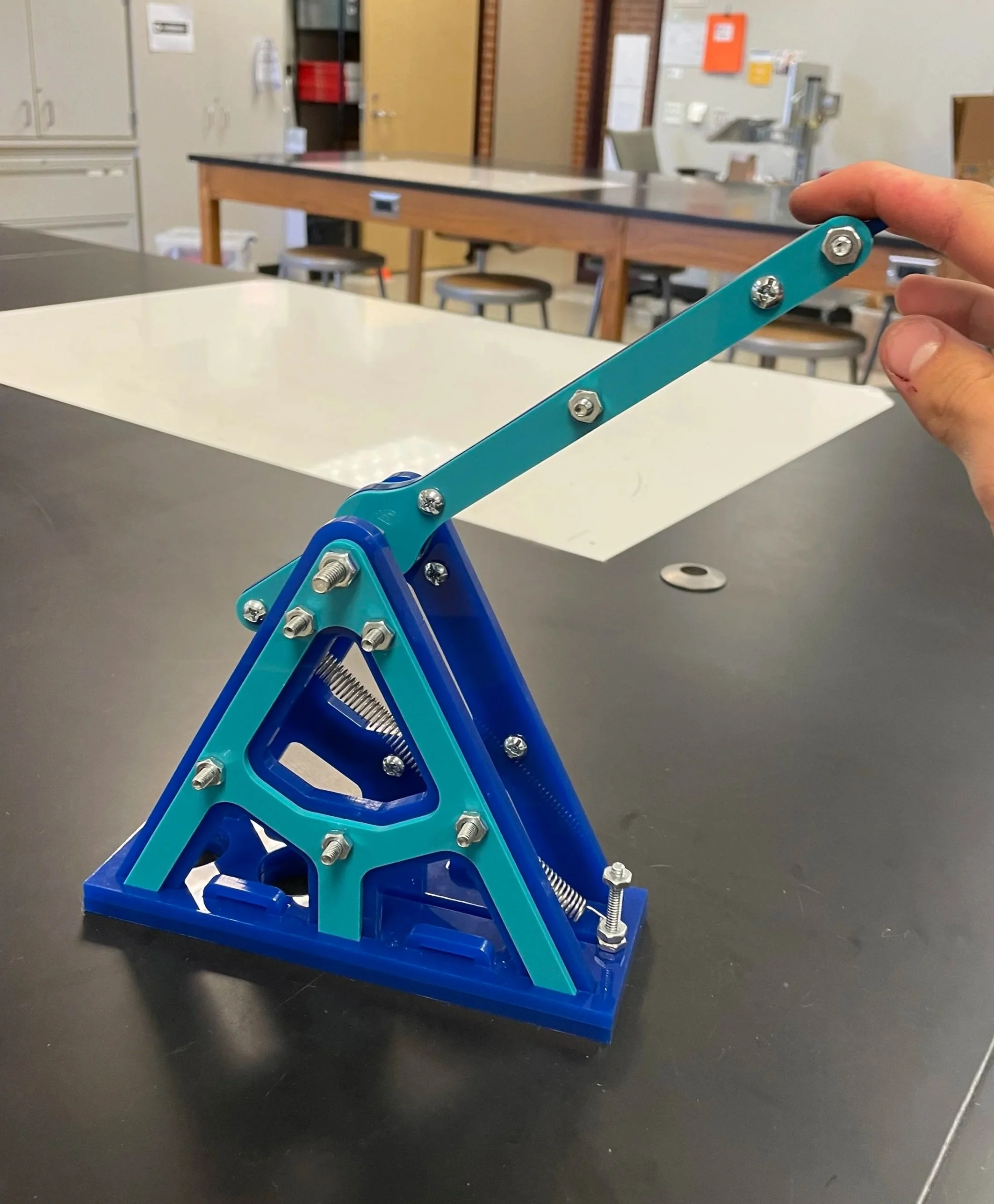
This acrylic model took the best of the previous trebuchet design and the 3D printed proof of concept to make something truly impressive. This device won first place, launching the ping pong ball over 30ft, and this was only possible due to the intentional and large degree of adjustability built into the design.
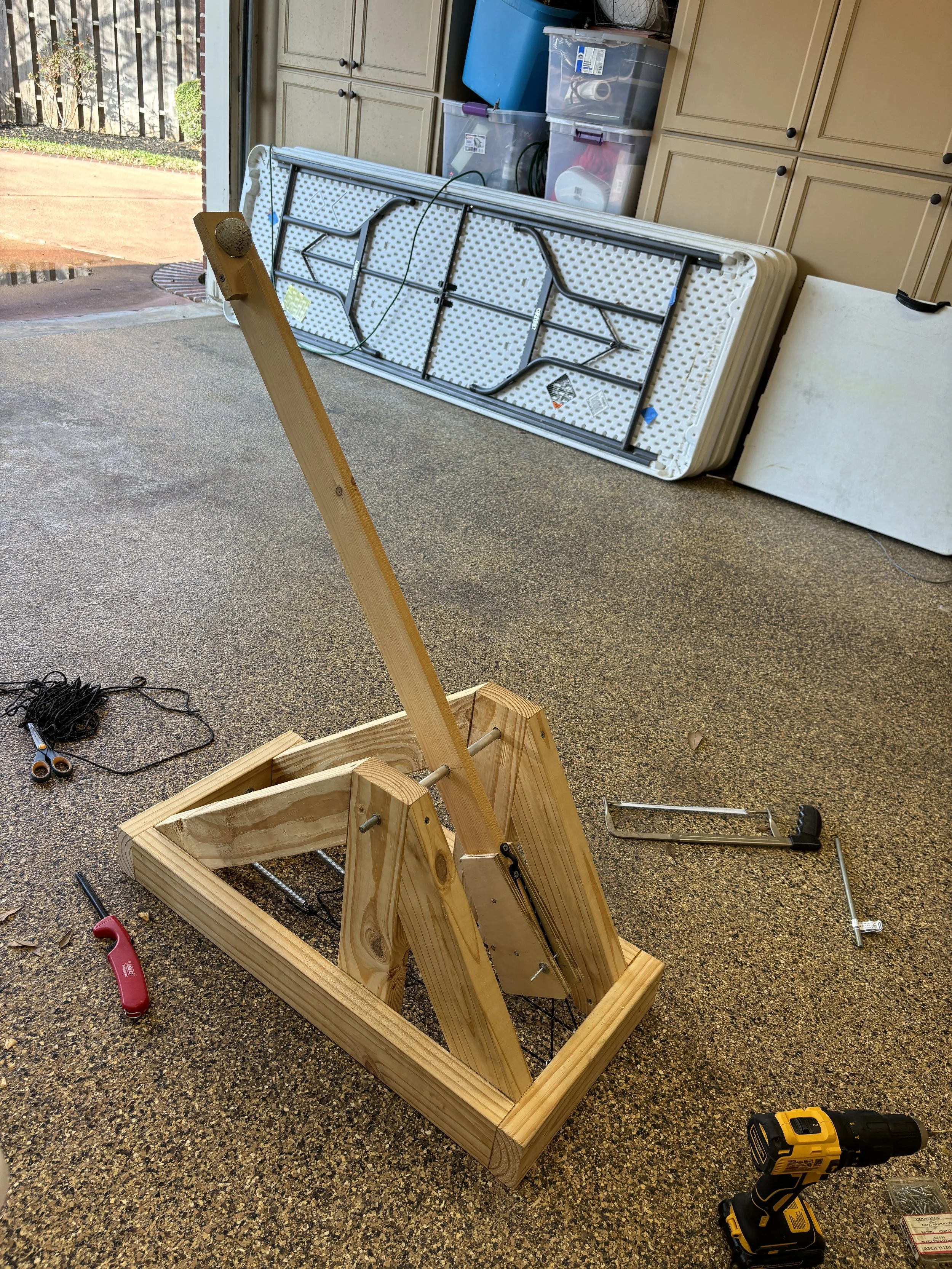
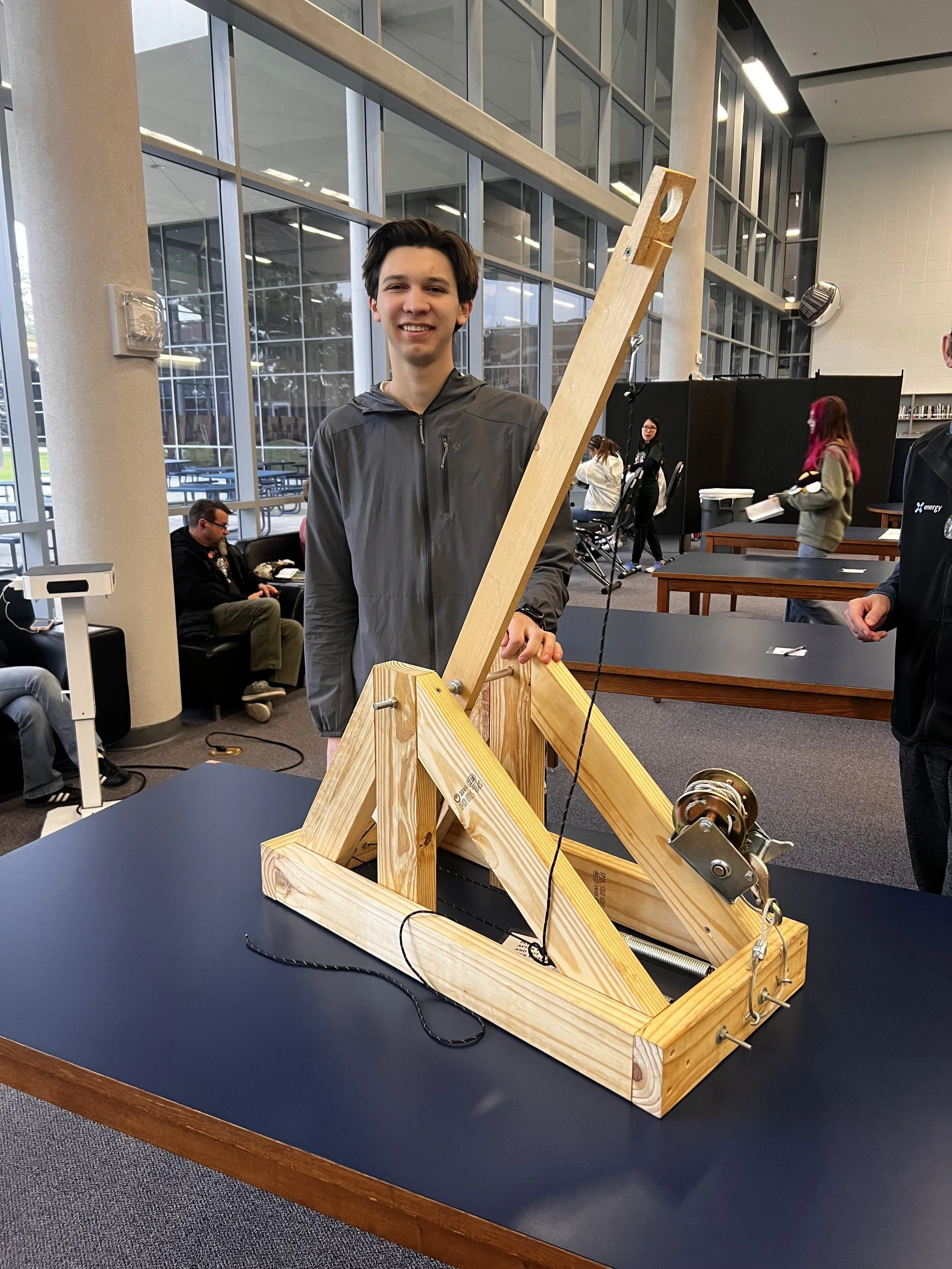
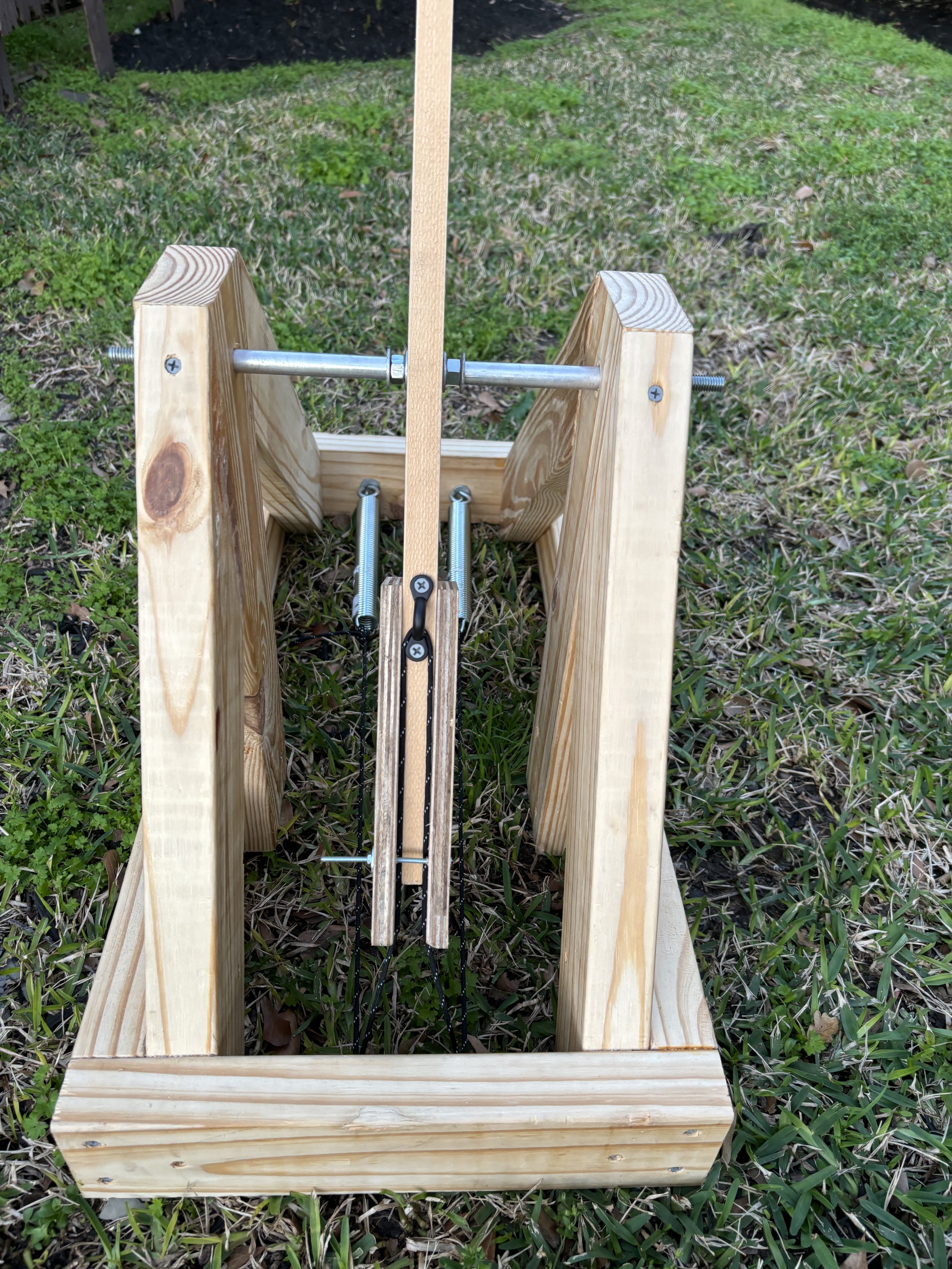
Design 3: Scaling Up
This was my final and most impressive design, using a wood frame, hand winch, and proper hardware to launch a golfball over 150ft, once again securing first place in its division. I was able to use my prior knowledge and thoughtful CAD to generate detailed plans and build a highly effective device.
Ballista
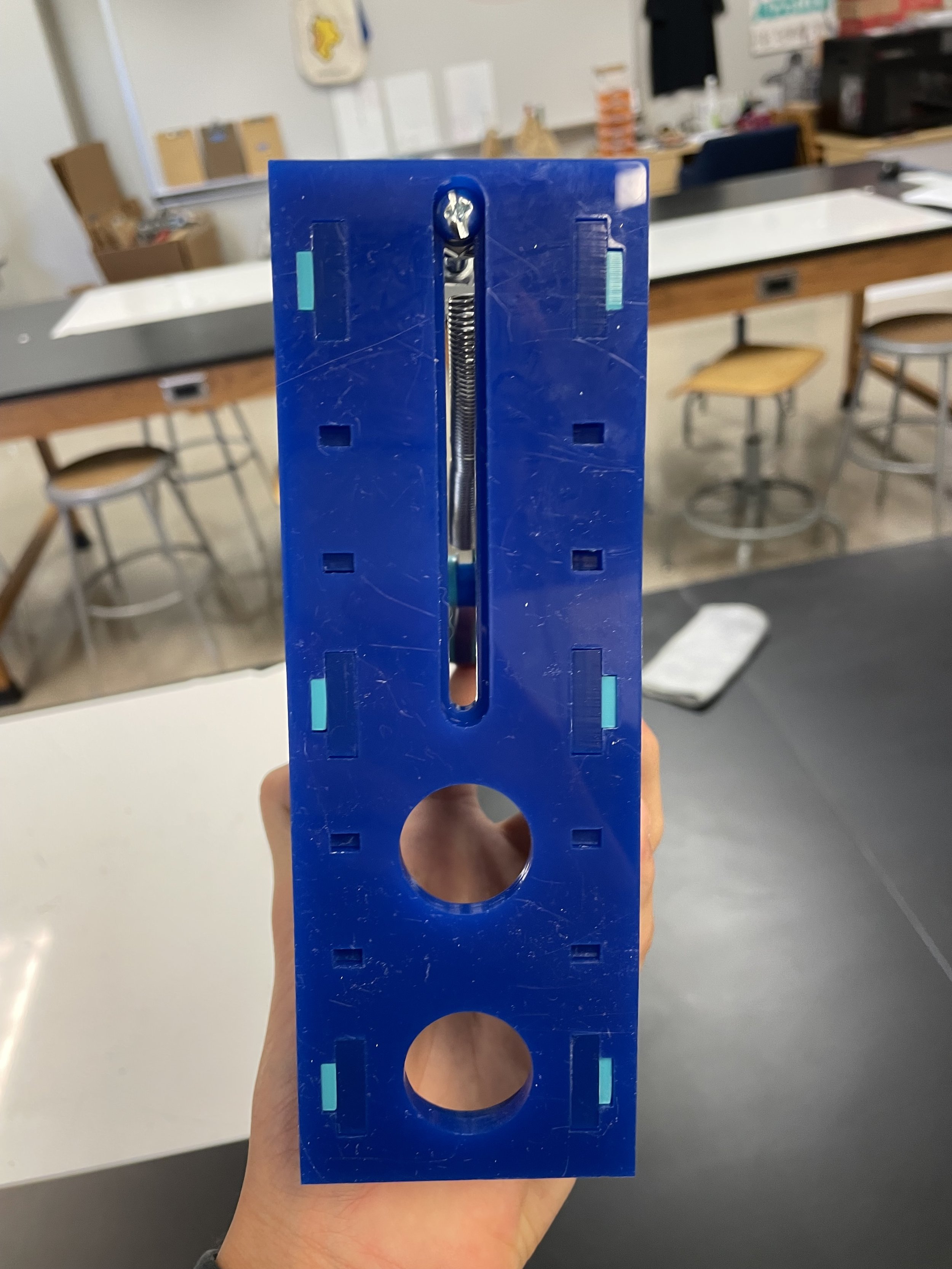
Between competitions I had some free time and some inspiration, so I figured I would experiment with an entirely new form factor that I thought could be fun to build and test.
While it was in fact fun to build, it did not function very well, only launching the ping pong ball a few feet due to a lack of mechanical advantage between the acceleration of the springs and the motion of the ball. In a future design I would consider creating some kind of lever or arm to create that advantage.